Between March 2020 and March 2021, Congress appropriated nearly $190 billion to support pandemic relief and recovery in K-12 schools through the Elementary and Secondary School Emergency Relief (ESSER) fund. States could set aside 10 percent of that amount – totaling approximately $19 billion nationwide – for use by the state education agency (SEA). ESSER was a one-time pandemic relief program. Each infusion of dollars has its own obligation deadline, with the final deadline for the last round of funding on September 30, 2024. This website explores how SEAs used their pandemic relief funds and documents some outcomes and impacts from state-led recovery investments.
Explore ESSER Investment to Impact Fact Sheets: How States Used Federal Relief Funding to see how state ESSER investments had an impact in states across the country.
States made big investments with one-time pandemic relief funds to solve urgent and unprecedented challenges. By far, the top priority for SEAs was academic recovery, with high-dollar investments in tutoring and accelerated learning, out-of-school time programs, high-quality curriculum and instruction and more.
Other state priorities included recruitment, retention and support for school staff and student and staff wellbeing. Altogether, these spending categories illustrated how states prioritized their pandemic recovery efforts.
CCSSO’s analysis focused on state-level commitments, or funds that were obligated through contracts, awarded through subgrants or spent by the SEA.
Explore this dashboard to learn more about ESSER state reserve spending priorities, commitment of funds, state examples and more. (last update was March 2024)

It takes time to conduct rigorous, causal research on the impact of educational investments. As long-term research is underway on the impacts of this aid, early evidence from state recovery efforts show that state investments had an effect. Explore the map below to view ESSER impact stories from across the country.

States and districts had until September 30, 2024, to obligate their remaining ESSER funds through the American Rescue Plan, at which point they were required to either find new funding sources for ESSER programs or bring them to a close. The impact of the sunsetting of funding had a different on states and districts, though the most significant funding shifts were in lower-income districts that received larger shares of ESSER funding.
ESSER was designed to be a one-time emergency relief program, and states and districts planned their investment strategies knowing that the funding would not be renewed. However, continued support is needed to fully close learning gaps and address student and educator wellbeing. Additionally, emerging evidence shows that students could continue to benefit from recovery innovations outside of a pandemic environment. Identifying and sustaining high-impact investments could strengthen the K-12 education system for years to come.
In 2024, the final year of ESSER spending, SEAs played important roles to support conditions for sustainability in their states. Learn more in CCSSO’s Sustainability Roadmap here and see examples from states across the country in this blog post.
To navigate COVID-19’s impact on schools, states received an unprecedented $190 billion for K-12 education through ESSER, which was designed to address pandemic-related needs over six academic years. Ten percent of that amount, or approximately $19 billion, was allocated for state education agency use. These funds were allocated through three tranches (CARES, CRRSA and ARPA), each with separate timelines for obligating and spending funds.

At the state level, the ESSER reserve is subject to different state governance and fiscal management processes, and this context matters. Some state agencies have the ability to develop their own budgets while many others require authorization from the state board of education or the legislature before they were able to make awards.
In general, the roughly $19 billion in ESSER state reserve funding was flexible and could be spent on any activities authorized under K-12 education law. The most restrictions come with ESSER III, for which 5% of the overall allocation had to be dedicated to unfinished learning, 1% for summer school and 1% for after-school programming.

|
State Actions and Opportunities to Sustain High-Impact Investments: This resource from CCSSO was designed to serve as a conversation starter to help state leaders consider actions and opportunities to sustain high-impact investments.
|
Sustaining Recovery Investments with Federal Formula Funds: Student Wellbeing: This resource from CCSSO looks at how traditional U.S. Department of Education grant funds could support student wellness.
|
| Sustaining Recovery Investments with Federal Formula Funds: Recruiting & Retaining Educators: This resource from CCSSO looks at how traditional U.S. Department of Education grant funds could support teacher recruitment and retention.
|
How Traditional U.S. Department of Education Grants Can Help Sustain ESSER Activities: The Coalition to Advance Future Student Success worked in partnership with the Federal Education Group, PLLC to develop this resource to help state and district leaders identify strategies and pathways to sustain high-impact investments.
|
| FAQs on Accessing Federal COVID-19 Relief and Sustaining Programs After 2024. This resource from CCSSO and the Summer Learning Association outlines frequently asked questions for accessing federal COVID-19 relief funds and sustaining programs after 2024.
|
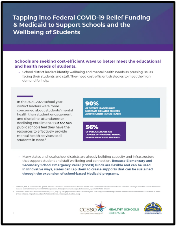
Tapping into Federal COVID-Relief Funding & Medicaid to Support Schools and the Wellbeing of Students: This handout includes guidance about how states can utilize federal relief funding to expand school Medicaid to support student mental health, including recommendations for coordination across agencies.
|
| Advancing and Sustaining Student and Staff Wellbeing Initiatives: A Resource Guide for States: This guide, developed in partnership with WestEd, provides state leaders an overview of five actions necessary to establish lasting, effective student and staff wellbeing initiatives.
|
|
Publications
ESSER Fact Sheets
ESSER Investment to Impact Fact Sheets: The ESSER Investment to Impact Fact Sheets, highlight national trends and high-impact examples of state investments from the 10% ESSER state set-aside. Fact sheets cover topics ranging from high-impact tutoring to teacher recruitment and retention. Explore the fact sheets here.
FAQs on Accessing Federal COVID-19 Relief and Sustaining Programs After 2024: The American Rescue Plan Act required states and districts to set aside a certain amount of their ESSER funds for specific activities, including summer and after-school programming, with an obligation deadline of September 30, 2024. While the ESSER program began sunsetting, states and districts dedicated thought to how to sustain the investments they made in summer and after-school programming. CCSSO and the National Summer Learning Association outlined frequently asked questions for accessing federal COVID-19 relief funds and sustaining programs after 2024. Explore them here.
Fact Sheet: This fact sheet highlights key takeaways on the ways state education agencies invested the 10% ESSER set-aside.
Road to Recovery Series
Road to Recovery: How States are Using Federal Relief Funding to Strengthen School Leader Capacity: Principals play a vital role in creating positive learning environments, but the COVID-19 pandemic added to their challenges. This report shows how states such as Illinois, North Carolina, Oklahoma and Utah used ESSER funds to develop and strengthen school leaders.
Road To Recovery: How States Are Using ESSER Funds To Support Student And Staff Wellbeing: Students, teachers and school staff experienced increased mental health issues throughout the pandemic, including feelings of isolation, hopelessness and stress. This report shows how state education agencies used federal ESSER funding to support student and staff wellbeing and mental health in response to the specific needs of their communities.
Road to Recovery: How States are Using Federal Relief Funding to Scale High-Impact Tutoring:
As states, districts and schools worked to recover academic losses, many turned to high-impact tutoring as a strategy. Using federal ESSER state set-aside funding, states supported districts in addressing unfinished learning to lead large-scale, evidence-based tutoring initiatives. Altogether, states collectively invested just over $700 million of state ESSER funds in targeted tutoring expansion efforts. Explore the report here.
Road to Recovery: How States Are Using Federal Relief Funds to Strengthen and Expand High-Quality Digital Learning: Technology played a critical role in states’ recovery efforts. In total, states have dedicated $1.16 billion of ESSER state set-aside funds to close the digital divide and expand access to high-quality remote learning. This report spotlights how states like Colorado, New Hampshire, North Dakota, Ohio and Utah used ESSER set-aside funding to strengthen and expand high-quality digital learning. Explore the report here.
Road to Recovery: How States are Using ESSER Funds to Support Teacher Recruitment and Retention: Shortages and challenges in recruiting and retaining a pipeline of diverse and effective teachers are not new. Unfortunately, the COVID-19 pandemic only exacerbated these challenges and further propelled the issue into the national spotlight. In total, states dedicated over $1.4 billion of ESSER state set-aside funding to strengthen their educator workforce and support other essential school personnel. These efforts included fortifying pipelines into the profession, enhancing and expanding certification and endorsement pathways, creating new teacher induction and mentoring programs, and supporting other recruitment and retention initiatives. Explore the report here.
The Road to Recovery: How States are Using ESSER Funds to Strengthen High-Quality Out-of-School Time Learning: Out-of-school time learning opportunities provided students with structured and supervised time outside of school for learning and enrichment. But the COVID-19 pandemic inceased demand at the same time the need for additional support outside of the classroom has grown. States have dedicated more than $3.2 billion from their ESSER set-aside funds to provide and expand access to high-quality out-of-school time activities. Major investments included subgrants for multipurpose and academic programs as well as investments in balanced calendar initiatives, college and career readiness programs, kindergarten transition programs, and microgrants for families. Explore the report here.
The Road to Recovery: How States are Addressing Unfinished Learning in Math with ESSER Set-Aside Funding: Nearly every state used a portion of the $19 billion in federal Elementary and Secondary School Emergency Relief funding set aside for state use to provide targeted supports around instruction and acceleration in math. This CCSSO Road to Recovery report highlighted five investment priorities for math acceleration: high-quality instructional materials, professional development, diagnostic and assessment tools, high-impact tutoring and out-of-school time programs. At the time of this report’s release, these investments were already starting to demonstrate an impact on participating students. Explore the report here.
Road To Recovery: Sustainable State ESSER Investments in Literacy To Improve Student Performance: State education leaders worked to bolster student reading skills using the 10 percent state set-aside through the Elementary and Secondary School Emergency Relief (ESSER) fund. These investments included nearly $900 million for initiatives exclusively focused on literacy and another $600 million on initiatives that prioritized literacy among other subject areas. CCSSO’s Road to Recovery: Sustainable State ESSER Investments in Literacy to Improve Student Performance report examined investment trends, state examples, promising practices and strategies for long-term sustainability of effective SEA literacy programming funded through ESSER state set-aside dollars. Explore the report here.
Road to Recovery: Improving Student Attendance and Engagement with State ESSER Funds: To address the significant challenge of chronic absenteeism and ensure students could fully benefit from targeted academic recovery efforts as well as the general benefits of being present in school, state education agencies (SEAs) invested their ESSER state set-aside funds in initiatives that explicitly targeted student attendance and engagement, as well as initiatives that tackled the underlying root causes of chronic absenteeism, such as student health and wellbeing. This report examined investment trends, state examples, promising practices and strategies from effective SEA efforts to reduce chronic absenteeism using ESSER state set-aside dollars. Explore the report here.
Road to Recovery: How States Are Building Pathways to Postsecondary and Career Success Using Federal Relief Funds: States are increasingly recognizing the role schools play in preparing students for life after high school, and the COVID-19 pandemic only increased the urgency behind these efforts. Aided by federal relief funding for K-12 education, state education agencies (SEAs) are working to fortify pathways to postsecondary and career success. At least 40 states collectively dedicated ESSER state set-aside funds to support college and career readiness, and included investments to support career and college advising, work-based learning, out-of-school time programs, early postsecondary opportunities and industry-recognized credentials. Explore the report here.
Blogs
CCSSO – Introducing the COVID Relief Data Project
Education Commission of the States – Trends in State Allocations of ESSER Funds
CCSSO – Using ESSER to Expand Access to Digital Learning in Utah
CCSSO – Using ESSER to Improve Student and Staff Wellbeing
CCSSO – Using ESSER Funds to Elevate Student Voice
CCSSO – How Tennessee and Ohio are Measuring the Impact of the Academic Recovery Investments
CCSSO – How States Are Planning for the End of ESSER
CCSSO – How States Are Utilizing Pandemic Relief Funds to Support Students Experiencing Homelessness
CCSSO – How States Are Using ESSER Funds to Support English Learners and Immigrant-Origin Students
Videos
How States are Using the ESSER Set-Aside to Lead on the Road to Recovery
ESSER Impact by the Numbers Series
Academic Recovery in Focus: The Impact of State ESSER Investments
ESSER Impact Spotlight on Illinois: Supporting Student Wellbeing
ESSER Impact Spotlight on Missouri: Strengthening the Educator Workforce
ESSER Impact Spotlight on Connecticut: Centering Youth Voice
ESSER Impact Spotlight on Utah: Expanding Blended Learning Innovations
Using State ESSER Funds to Support Innovative Educator Pathways
Using ESSER Funds to Strengthen High-Quality Out-Of-School Time Learning